
FOCUS ON MELISSA DE WINTER
It takes 20 to 100 layers of translucent wax to create each artwork.
Melissa De Winter first experimented with oils and other paints. But the move to the Perth Hills in Western Australia changed everything - including how she makes art.
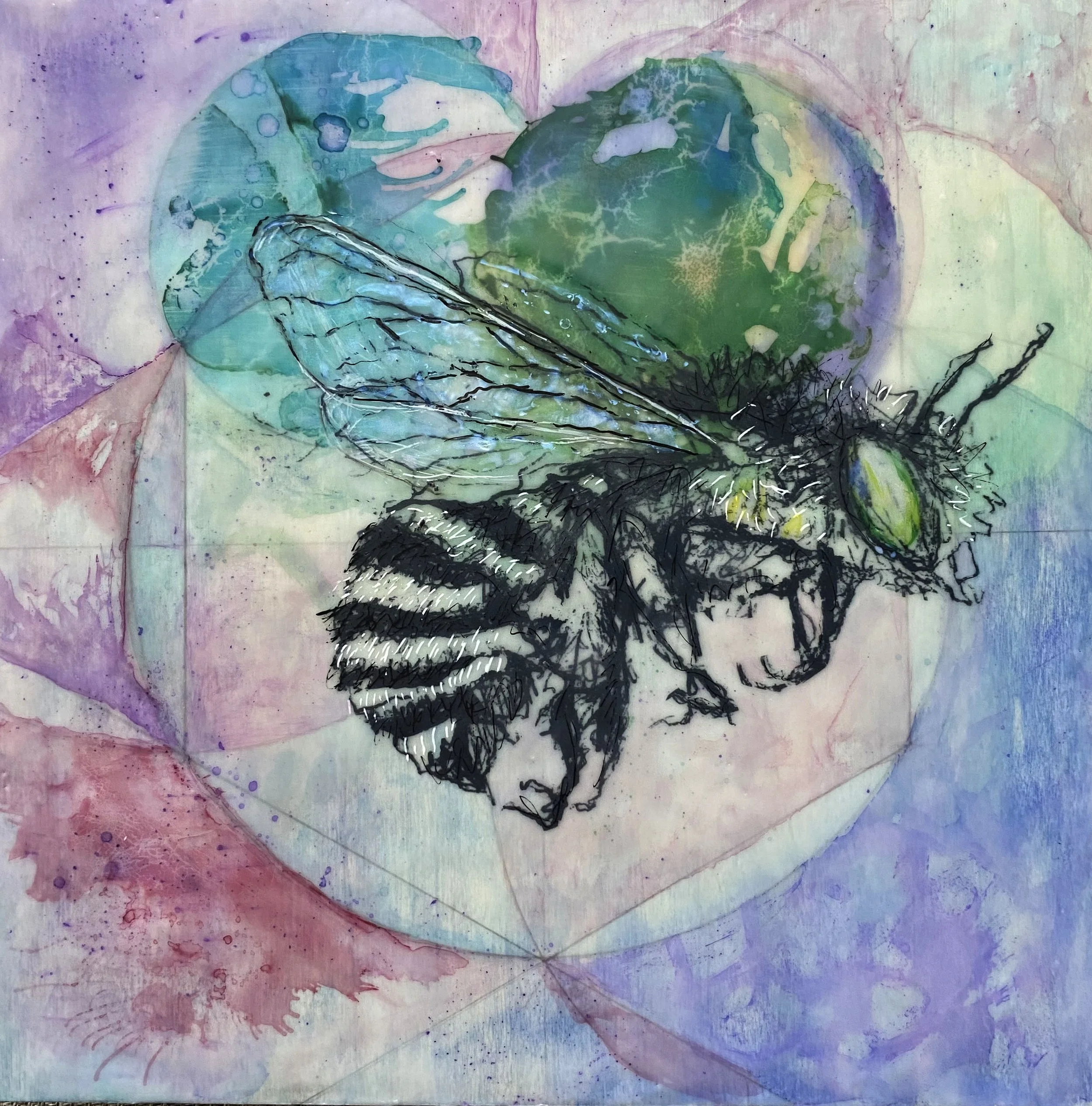
Her intention was to live sustainably. Local bees aroused a deep curiosity – so she became an apiarist. The more she learned, the more fascinated she became.
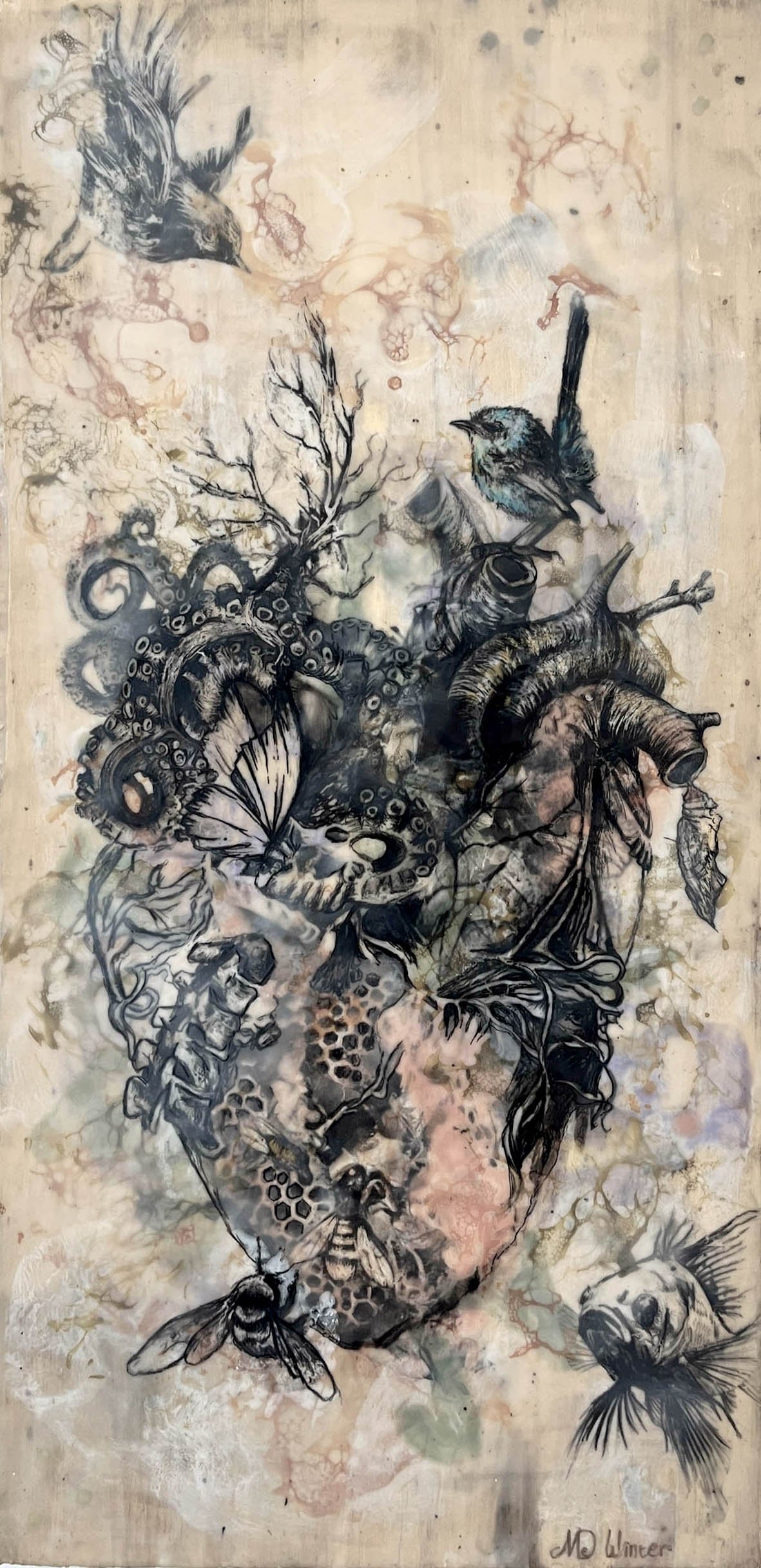
Animalia by Melissa De Winter, Encaustic and ink on upcycled packing pallet, https://www.melissadewinter.com.au/
Which is how the ancient technique of Encaustic painting - using hot bees wax – changed her practice. It was the perfect medium to understand and receive her artistic, environmental, and personal ethos.
‘I found a way to combine structure and randomness; it incorporates layers, painting and sculpting in one piece’.
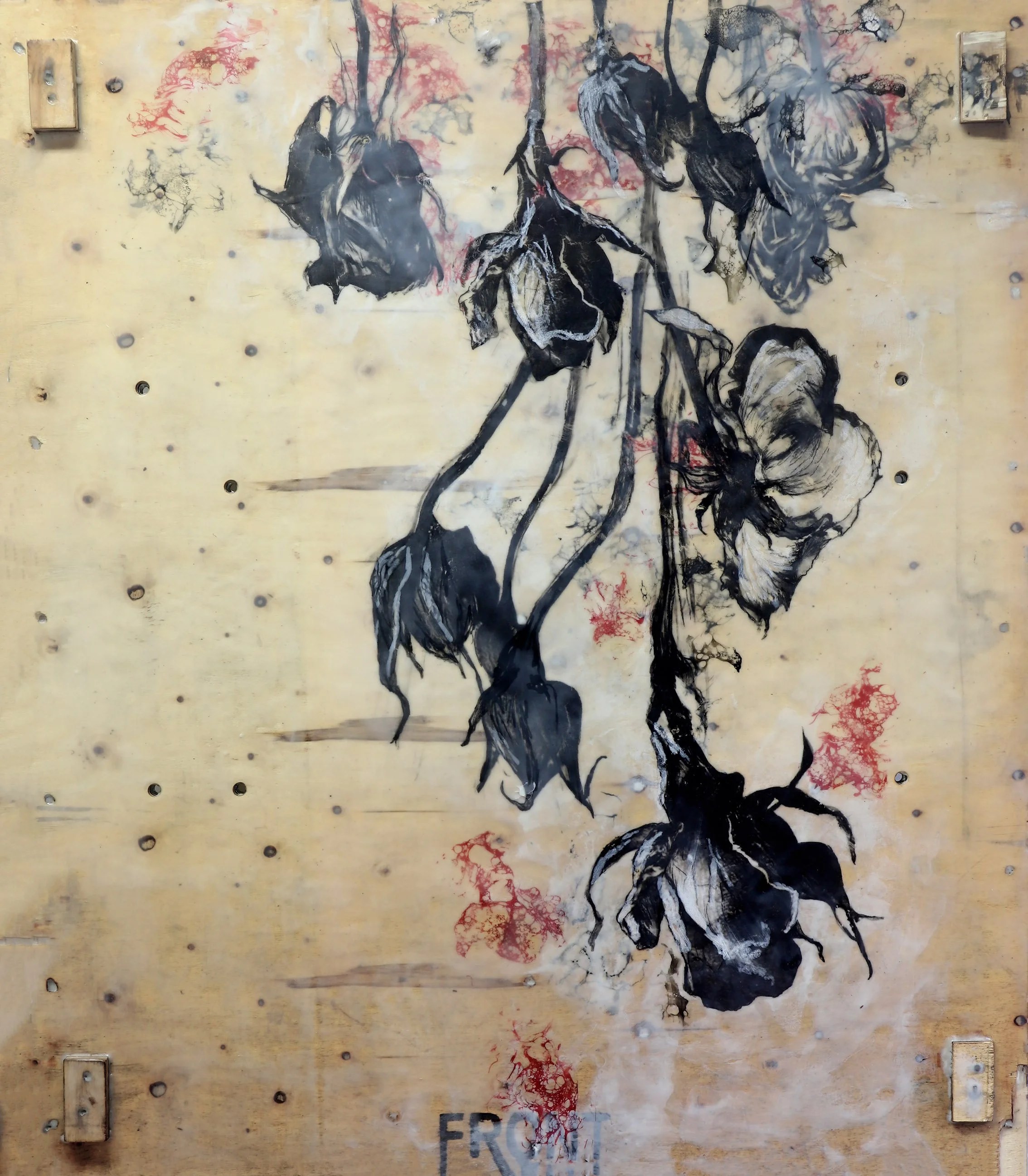
Are Roses Red by Melissa De Winter, Encaustic and ink on upcycled packing pallet
Understanding and knowing how to judge the viscosity of the wax is important. So, Melissa developed her own recipe.
And her tool of choice? Not a heat gun. She’s mastered a blow torch to create depth into her work. The drawback is the whole work could go up in flames on the 90th layer of wax in a split second of bad judgement.
Every layer is heated and fused with the previous layer with images selectively duplicated and highlighted, layer by layer. The wax interleaves the ink, oil pastels and shellac drawings of trees, flowers and pensive human skeletons. Surrounding light and where you stand to look at each piece brings out different elements and mysteries.
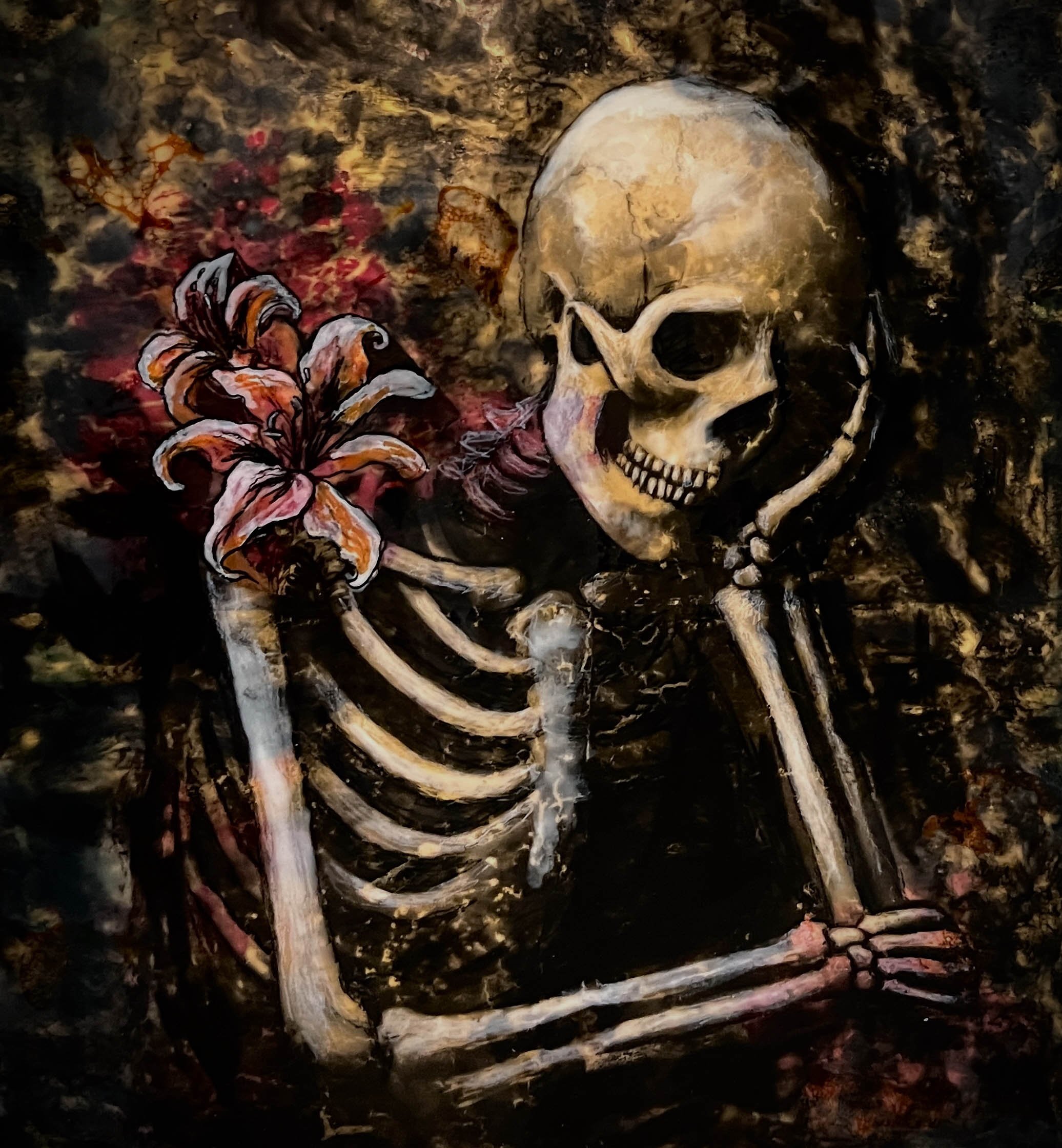
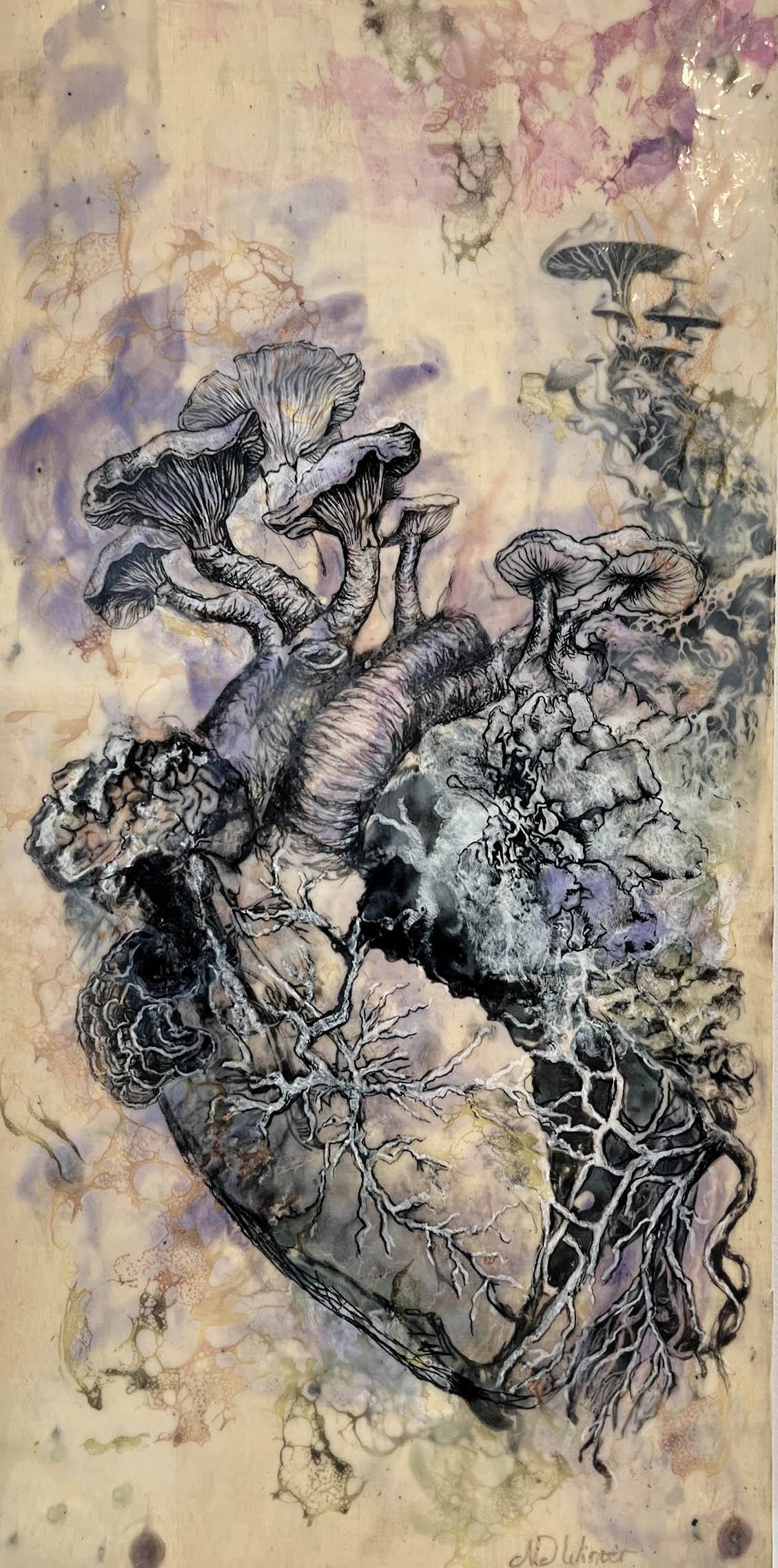
Reclaimed, her inaugural solo show at Ellenbrook Arts was a great success; it drew from the cycle of life; the discarded and dying celebrated with beginnings, beauty, and birth. All inseparable.
Are Roses Red is not a fresh bouquet yet beautiful none-the-less. ‘The dying roses possess the same foundational narrative - everything that is living dies…. It’s fascinating because it is the one irrefutable thing in life. I am personally comfortable with that, but some people aren’t’.
Ponder a skeleton, could be any one of us in that reflective pose.
The World Is On My Shoulders affirms that two-thirds of the world’s food crops are pollinated by bees.
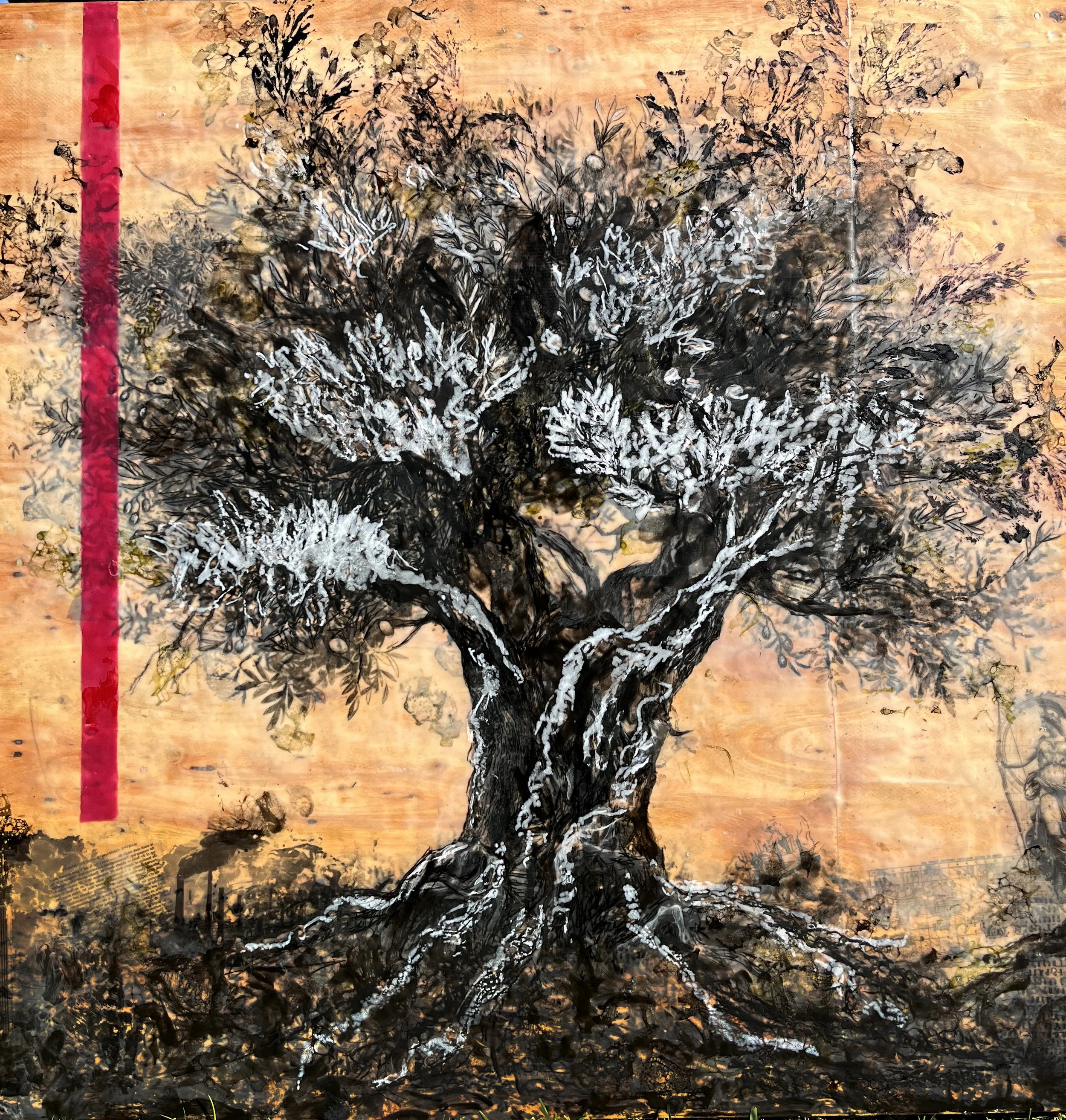
Moria by Melissa De Winter, Encaustic and ink on upcycled packing pallet
#paulasilbertartsconsultancy
#theartprimer
#melissadewinter
#encouasticart
#encausticartist
#sustainabilityartwork
#ecoart
#environmentalart
#upcycledart
#perthartist
#mundaringhillsopenstudios
#ellenbrookarts
#mentoring
#artgallery
#discoverart
#discoverartists
#artisticgrowth
#visualartist
#visualarts
#artistlife
#usaartists
#australianartist
#perthartist
#melbourneartists
#oreganartist
#micheganartist
#texasartist
#northcarolinaartist